 Getting started
How to Choose Dumbbell Weights as a Beginner
Find a sensible starting dumbbell weight for each exercise using a trial set, then compare fixed and adjustable weights without universal weight charts.
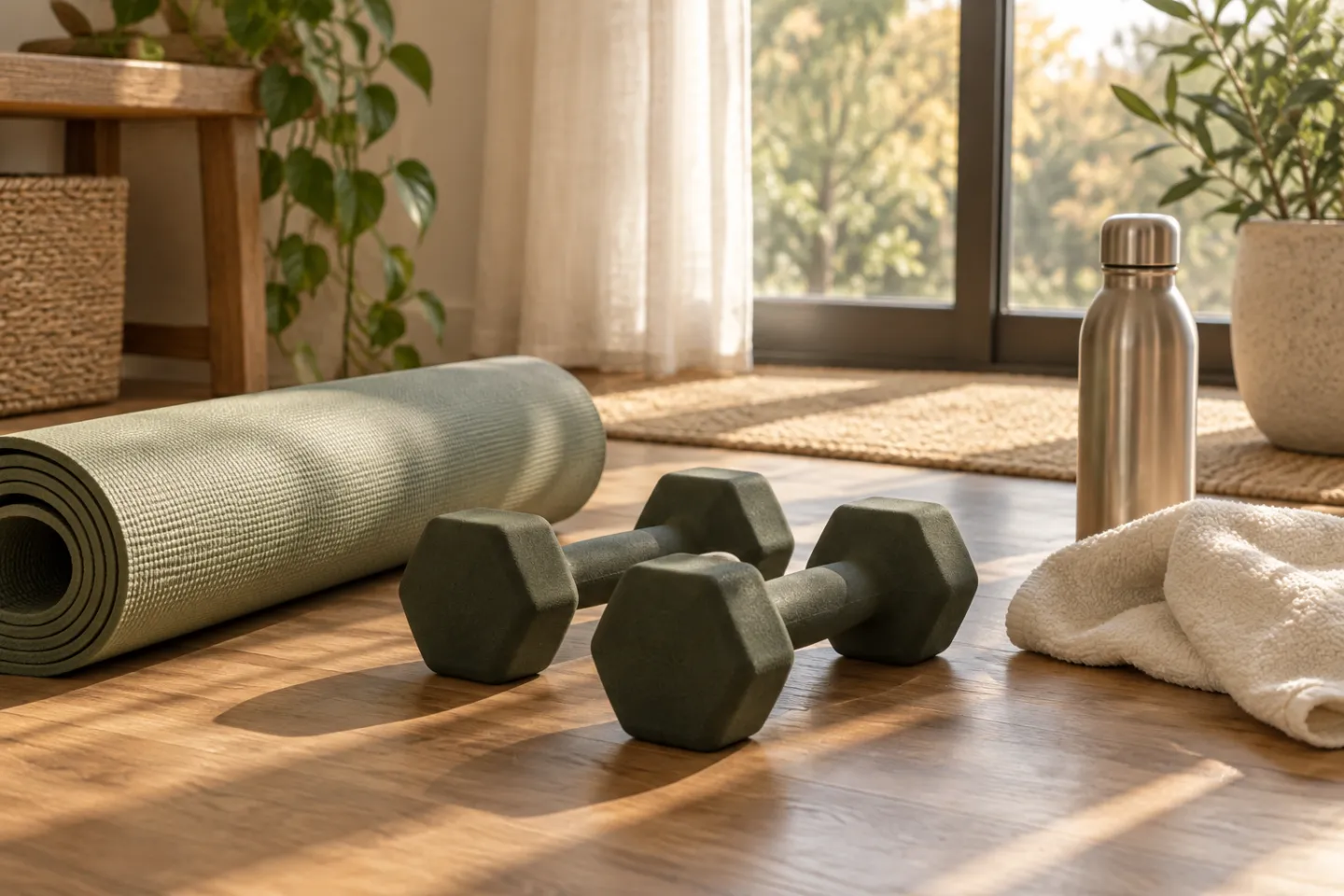
Choose a starting dumbbell weight by trying the exercise, not by your age, gender, or a chart of what beginners “should” lift. A useful starting load lets you perform your planned repetitions with control, finish without straining, and safely put the weight down. Different exercises usually need different loads.
If you are buying weights, test a few options at a gym or store when possible. A pair that is suitable for one exercise may be too heavy for another and too light for a third. This guide provides a practical selection process for generally healthy adults, not an individualized strength assessment.
Decide what the dumbbell needs to do
Write down the movements you intend to practice before shopping. A two-handed goblet squat uses one dumbbell; a floor press usually uses a pair; a one-arm row uses one side at a time. This changes both the useful weight range and whether you need matched pairs. Avoid buying a large set simply because it appears in a workout photo.
Also check how you will store and move the equipment. If weights live under a bed, you need a safe way to retrieve them. If you will train on an upper floor, consider controlled placement, stable flooring, and your building’s rules. Equipment that is inconvenient to set up can make an otherwise simple routine hard to repeat.
Use a low-pressure trial set
First learn the motion without weight or with the lightest practical option. Then try a small, controlled set. Eight repetitions is a convenient trial example, not a pass/fail standard or a test to failure. You should be able to breathe, maintain your intended movement, and stop with several more good repetitions available.
Rest before trying another load. If the first choice felt very easy, test the next small increment. If you needed momentum, shortened the movement unexpectedly, or could not put the dumbbell down comfortably, choose less resistance. Stop the trial for pain or other concerning symptoms. Ask for instruction when technique, rather than effort, is the limiting factor.
- Can I get into and out of the starting position safely?
- Do the last repetitions still resemble the first?
- Can I pause and deliberately stop, without dropping or swinging the weight?
- Does the movement feel comfortable in the joints involved?
- Have I tested this exercise separately from the others in my plan?
Expect different answers for different movements
Use the following worksheet to make the decision specific. “Start light” only becomes useful when you identify what is limiting the set. Grip, balance, setup, and movement confidence matter alongside muscle effort. A heavier weight is not an upgrade when it makes the exercise less controllable.
| Movement | Watch during the trial | If the trial is awkward |
|---|---|---|
| Goblet squat | Can you hold the dumbbell securely while squatting comfortably? | Practice the squat without weight |
| One-arm row | Can your torso stay steady without a forceful twist? | Reduce the load and improve support |
| Floor press | Can you position and lower both weights safely? | Use lighter weights or a wall push-up |
| Romanian deadlift | Can you hinge without chasing the floor or losing control? | Practice the hinge unloaded |
| Biceps curl | Can your upper arm stay relatively still? | Reduce the weight instead of swinging |
Compare fixed and adjustable dumbbells
Fixed dumbbells are straightforward to pick up and change between exercises, but several pairs need storage space. Adjustable dumbbells can cover multiple exercises in a smaller footprint, although changing settings takes time and the shape may feel bulky for some movements. Neither option is automatically better for a beginner.
For adjustable equipment, read the manufacturer’s locking, handling, and maintenance instructions. Check that every plate or selector is secured before lifting. Test whether the handles feel comfortable and whether the smallest available increment is useful. Compare the usable range per dumbbell, not an advertisement showing the combined weight of both.
If your budget only covers one pair, select exercises the pair suits and use bodyweight alternatives elsewhere. Do not use a weight that is too heavy for a press just because it works for your squat. Borrowing or using a gym briefly can help you make a more informed purchase.
Let repeated sessions inform the next purchase
Keep a record of the exercise, weight per hand, repetitions, and control. Consider increasing resistance when your current exercise and repetition target have become consistently manageable. The exact timing varies, and a weekly increase is not mandatory. ACSM’s current guidance emphasizes tailoring training to the person and goal.
If the next available weight is a large jump, add a little repetition practice within your plan or choose equipment with smaller increments. Do not make two changes at once and then assume the heavier weight caused better results. A pair of dumbbells can remain useful for warm-ups or smaller movements even after other exercises progress.
Leave with a usable decision
Your final choice should answer three questions: which exercises this equipment supports now, how you will adjust those exercises as you improve, and where the weights will safely live. The NHS illustrates simple movements using light handheld resistance, while ACSM recognizes several useful forms of resistance training. A costly equipment collection is not the starting requirement.
Write your trial results down before buying. Save the equipment instructions, keep the workout area clear, and schedule the first session. The right beginner dumbbell is the one you can use deliberately for the movement in front of you.
Sources & further reading
Published by the Autumn team on . Have a correction or a question? Get in touch.