 Strength training
A Home Dumbbell Workout Without a Bench
Set up a small home training space and follow a no-bench dumbbell routine with practical substitutions, storage tips, and a repeatable schedule.
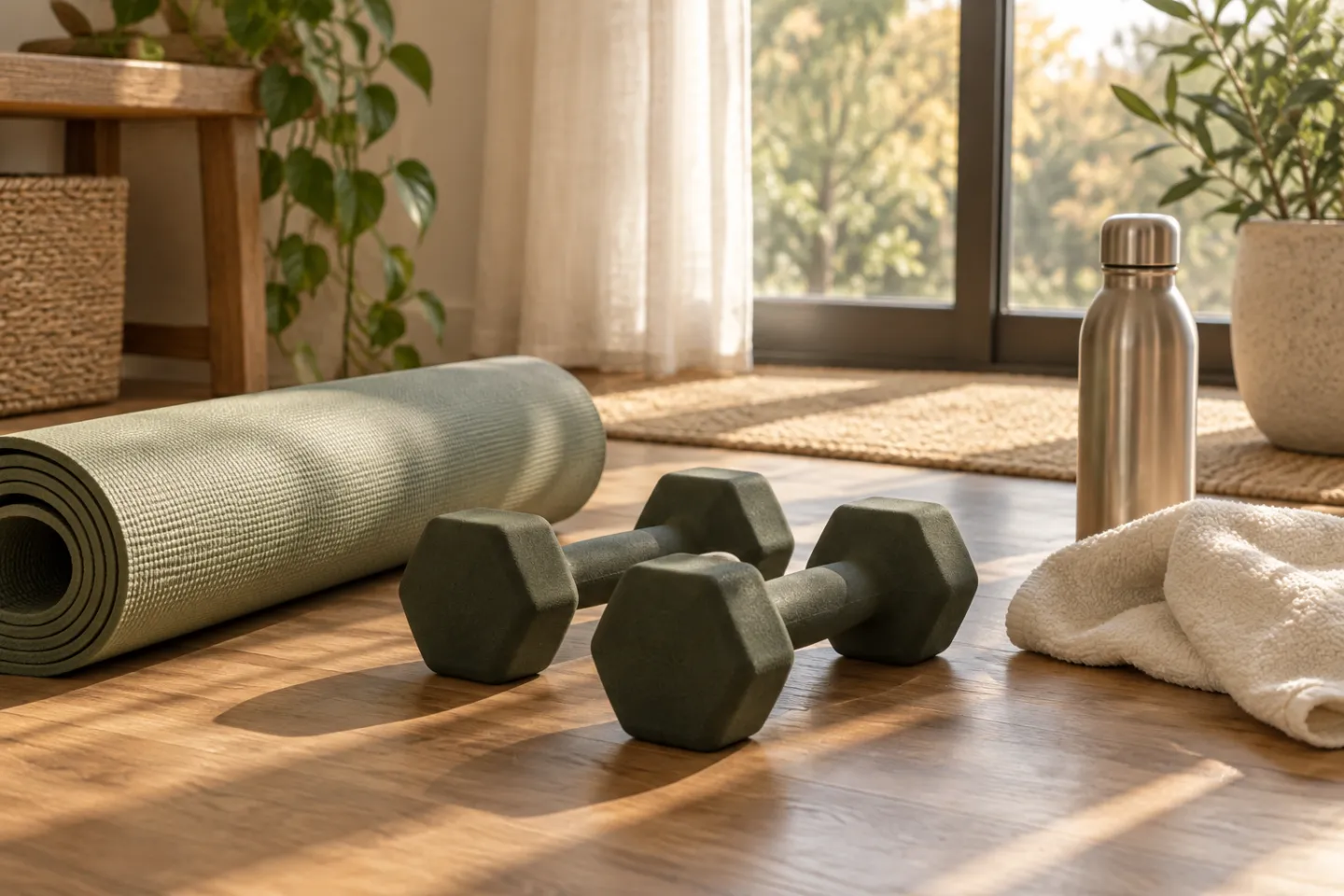
You can build a useful home dumbbell session without a bench or a dedicated gym room. The essentials are a clear floor area, secure weights, a stable support surface if you need one, and a short routine you can repeat. Plan the space and transitions before adding exercises.
The original routine below is for generally healthy adults who already understand the listed movements. Beginners can rehearse them without weights or use the easier alternatives. It is an equipment-and-setup example, not a personalized program or a claim that one pair of dumbbells suits every exercise.
Create a training station that can disappear afterward
Start by testing the space with empty hands. Can you lie down fully, stand up, and extend your arms without hitting a table, ceiling fan, or wall? Is there a clear route around the weights? A small room can work if it stays free of other people and pets during the session.
Use a firm, nonslip surface under your feet. A soft cushion is not a lifting platform. If you use furniture for support, verify that it cannot tip or slide under pressure; a dining chair is not automatically a safe exercise bench. The NHS similarly emphasizes stable furniture for its home strength examples. Keep any wheeled furniture out of the setup.
Put the dumbbells where they will not roll. Keep a phone or notebook within reach for the plan, with cables outside your stepping area. Decide where you will put each weight down before picking it up.
Use a no-bench routine with simple transitions
Begin with several minutes of easy movement and unloaded rehearsals. Complete each exercise before moving to the next, rather than rushing through a circuit. Try one working set initially; a second set is an option when the first is manageable. Six to ten controlled repetitions is an illustrative starting range, with the same count on each side for rows.
Rest roughly one to two minutes between sets, or longer when needed for steady technique. Your room layout and experience may make the first session slower than later ones. Leave that time available instead of cutting rest to match a video.
| Exercise | Where it happens | Alternative |
|---|---|---|
| Goblet squat | Clear standing area | Unweighted sit-to-stand from a stable chair |
| Dumbbell Romanian deadlift | Same standing area | Unweighted hip-hinge rehearsal |
| Supported one-arm row | Beside a verified stable support | Learn another supported row setup with an instructor |
| Dumbbell floor press | Clear mat or comfortable firm floor | Wall push-up |
| Standing calf raise | Beside stable balance support | Bodyweight version with support |
Work around the limits of one pair
A single pair may be appropriate for rows and too heavy for pressing. Set the weights aside and use the bodyweight substitute rather than forcing a poor match. For a goblet squat, holding one manageable dumbbell can be more practical than holding two. Be explicit about which setup you used in your log.
If your weights are adjustable, group exercises sensibly to reduce unnecessary changes, but keep the correct load for each movement. Change and secure the weights only while they are resting safely. Do not improvise attachments or use loose household objects as additional plates. Follow the manufacturer’s instructions for handling and storage.
Give household interruptions a clear rule
If a child, pet, delivery, or phone call needs attention, finish the current controlled repetition and put the weights down safely. Pause the session. Never try to supervise something else while holding a challenging load. When you return, check the area again and decide whether you have time to resume calmly.
On a short day, do fewer familiar exercises or fewer sets and record the shorter session. Do not turn the routine into a race. If noise is an issue, place dumbbells down deliberately rather than dropping them, and avoid assuming that a thin mat protects every floor. A lease or building policy may add restrictions.
Make the setup part of a repeatable week
Choose a place to store your weights, mat, and instructions together. Set two initial training appointments on separated days if that suits your week. CDC adult guidance includes regular strengthening alongside aerobic activity; a home routine can be part of that larger plan rather than your only movement.
Use a short note after each session: exercises, weight per hand, repetitions, and any setup problem. “Moved lamp; floor press now fits” is useful progress. Keep the routine stable long enough to see whether the space, schedule, and exercise selection are actually working before adding more equipment.
Know when the home setup needs to change
ACSM’s 2026 guidance recognizes home-based resistance training as a useful option. That does not mean equipment never limits a goal. If every available load has become easy for your planned movements, consider adjustable resistance, another exercise you can learn safely, or occasional gym access.
If you cannot get safely to the floor, find stable support, or control an exercise with your available weights, change the exercise or get guidance. Stop for sharp pain or concerning symptoms. The aim is a repeatable practice that fits your home, not a perfect imitation of a commercial gym.
Sources & further reading
- NHS: Illustrated strength exercises
- CDC: Adult activity guidelines
- ACSM: 2026 resistance training guidelines
Published by the Autumn team on . Have a correction or a question? Get in touch.