 Strength training
A Beginner Dumbbell Workout You Can Learn and Repeat
Learn a simple dumbbell routine with clear movement cues, easier options, sensible rest, and a log for your first sessions.
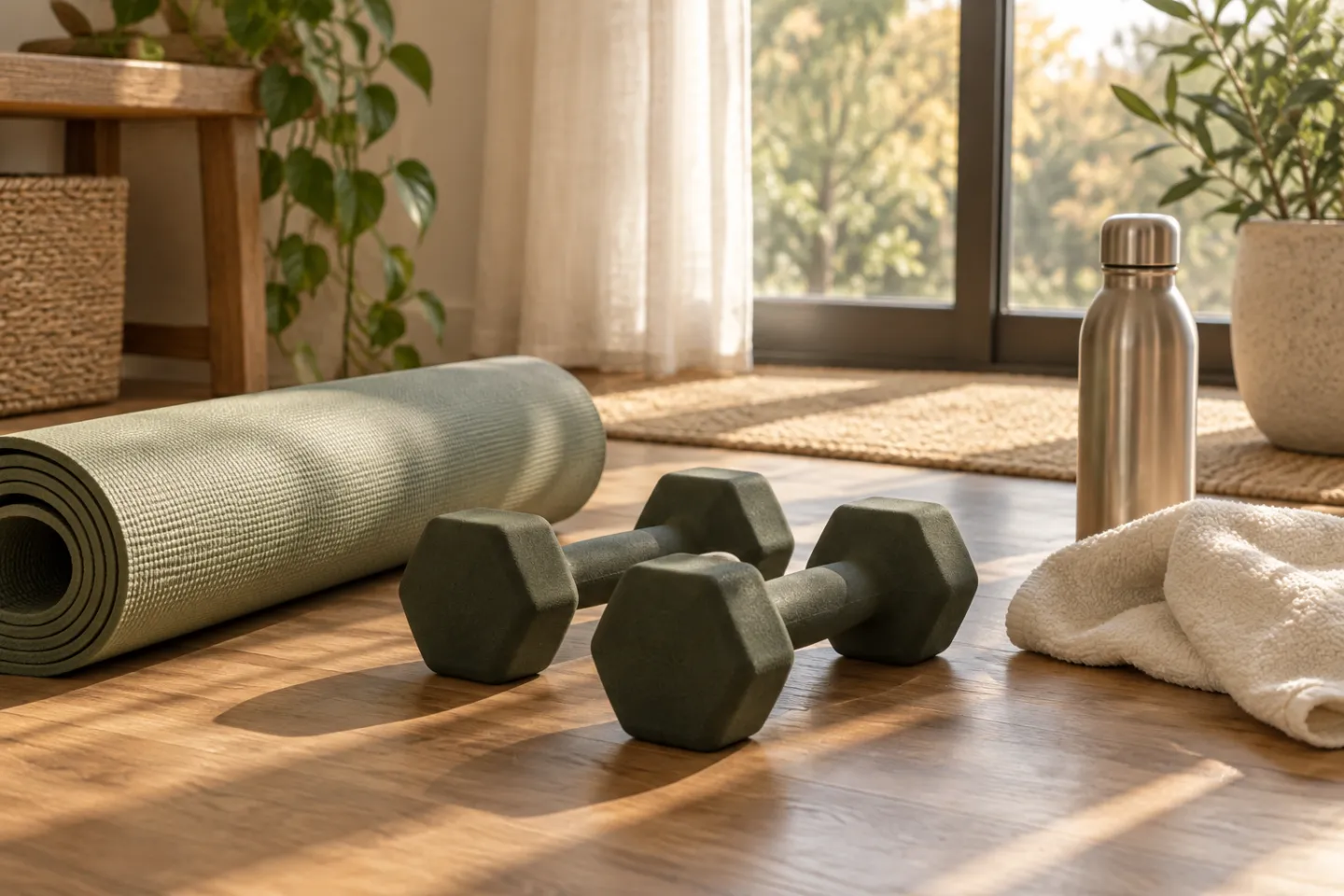
A beginner dumbbell workout should be easy to remember and easy to adjust. Start with a squat, a hip hinge, a supported row, and a floor press. Practice each movement with light resistance, rest between sets, and repeat the routine on another day before adding complexity.
The sequence below is an original learning routine for generally healthy adults. It is not a technique assessment or an individualized program. Use it only for movements you can perform comfortably; an instructor can help with anything unfamiliar. You can start with bodyweight practice before picking up dumbbells.
Set up for learning, not speed
Put your weights on a stable surface where they cannot roll into your feet. Clear enough room to stand, hinge, and lie down without hitting furniture. A mat can make floor work more comfortable, but it should not slide or interfere with stable footing. Practice getting down and back up without holding weights first.
Spend a few minutes moving easily and rehearsing the exercises. Choose resistance separately for each movement. The weight you can row may not be appropriate for a floor press. End practice sets with several controlled repetitions still possible; discovering the heaviest weight you can lift is not the task today.
Try one practice round, then a working round
A set means completing the repetitions of one exercise before resting. For the first visit, one working set of each exercise is a reasonable example. Repeat for a second set only if the first round felt manageable and your technique remains steady. Allow roughly one to two minutes between sets, taking longer when needed.
| Exercise | Example starting amount | Easier option |
|---|---|---|
| Goblet squat | 6–10 controlled repetitions | Unweighted sit-to-stand from a stable chair |
| Dumbbell Romanian deadlift | 6–10 controlled repetitions | Unweighted hip-hinge practice |
| Supported one-arm row | 6–10 repetitions on each side | Lighter dumbbell with the same stable support |
| Dumbbell floor press | 6–10 controlled repetitions | Wall push-up if floor access or handling weights is awkward |
Give the squat and hinge different jobs
For a goblet squat, hold one manageable dumbbell near your chest and lower only as far as you can control comfortably. Let your knees bend with your hips, keep your feet planted, and stand without bouncing. A stable chair can provide a clear sitting target for the unweighted version. Do not hold a heavy weight while figuring out the motion.
For a Romanian deadlift, begin standing with dumbbells near the front of your thighs. Keep a small bend in the knees and move your hips backward while the weights stay near your legs. Stop the descent before you need to round or strain your back to reach lower. The floor is not a required destination. Practice this pattern without weights if the difference from a squat is unclear.
Use support for rows and a controlled floor press
For the row, support your free hand on a surface that cannot tip or slide. Set your feet so you can stay steady, let the weighted arm hang comfortably, and draw the elbow back without twisting your torso to lift the weight. Lower under control. Switch sides and use the same intended repetition count, reducing it if needed.
For the floor press, begin with very light weights and a safe way to get into position. Lie on your back with knees bent and feet resting on the floor. Press the dumbbells upward over the chest, then lower until your upper arms gently meet the floor. Avoid bouncing the elbows. If entering or leaving this position feels awkward, use a wall push-up instead and get hands-on instruction before progressing.
Record what actually happened
A useful first-session log separates the plan from the result. Write the weight of each dumbbell, repetitions completed, and one observation for every exercise. If you used one dumbbell for squats but two for deadlifts, make that explicit. The total weight and the weight per hand are different numbers.
For example: “Row: 10 lb in one hand, eight left and eight right, stable support; could do more.” This is an invented logging example, not a suggested starting weight. At the next session, repeat the setup so you can tell whether control or repetitions improved. Do not compare your first-session loads with another person’s log.
Repeat before you complicate the routine
Keep this routine familiar for several sessions. When you can complete the chosen repetitions with consistent technique and comfortable control, add a repetition or consider the next manageable load. Change one variable at a time. If the next dumbbell jump is too large, keep the lighter weight and practice rather than forcing the increase.
ACSM’s 2026 recommendations favor individualization over rigid rules, while CDC describes strengthening as part of a broader active week. This sample is a foundation to develop, not every exercise you will ever need. Stop for sharp pain, dizziness, or concerning symptoms; ordinary effort does not require pushing through them.
Sources & further reading
- CDC: What counts as physical activity
- ACSM: 2026 resistance training guidelines
- NHS: Illustrated strength exercises
Published by the Autumn team on . Have a correction or a question? Get in touch.