 Nutrition
Meal Planning for Muscle Gain: A Flexible Day Template
Build a practical muscle-gain meal plan around regular meals, protein-rich foods, training fuel, and a weekly review without a rigid calorie prescription.
A meal plan for muscle gain should make it easier to eat consistently while following a progressive strength program. Start with familiar meals, include a protein-rich food at each, and leave room for carbohydrates, produce, and fats. Adjust the plan to your appetite, schedule, and training instead of copying someone else's calorie target.
The example below is a planning template for generally healthy adults, not a personalized diet or a promise of muscle growth. Its purpose is to help you decide what to buy, what to prepare, and what to review when your eating routine is difficult to maintain.
Connect the menu to a real training week
Write down your actual lifting days, work hours, commute, and usual meal breaks. A dinner that requires an hour of cooking may fit Sunday but fail after an evening gym session. Put the easiest meals beside the busiest days before choosing recipes. This turns the menu into a usable schedule instead of a collection of ambitious dishes.
The NIH Office of Dietary Supplements identifies adequate energy, carbohydrate, protein, fat, and hydration as part of the nutritional foundation for exercise. Protein matters, but it does not replace the rest of that foundation. A protein shake alone is therefore a poor default plan for every rushed dinner.
Use a day template with interchangeable parts
Choose one option in each row and decide its portion using your existing needs and preferences. These combinations have no assigned calorie or protein totals: brands, amounts, and preparation change those numbers. The optional snack is useful when meals are far apart or appetite calls for it, rather than a requirement to eat on a fixed clock.
| Meal | Example combination | Make it easier |
|---|---|---|
| Breakfast | Greek yogurt, oats, berries, and nut butter | Set out the bowl and dry ingredients the night before |
| Lunch | Chicken or tofu, rice, roasted peppers, and a sauce you enjoy | Reserve ingredients from dinner before serving |
| Dinner | Lentil pasta or a bean-and-meat chili with vegetables | Cook enough for one planned future meal |
| Optional snack | Milk or fortified soy beverage with fruit and toast | Keep shelf-stable components available at home |
Find protein options you will actually repeat
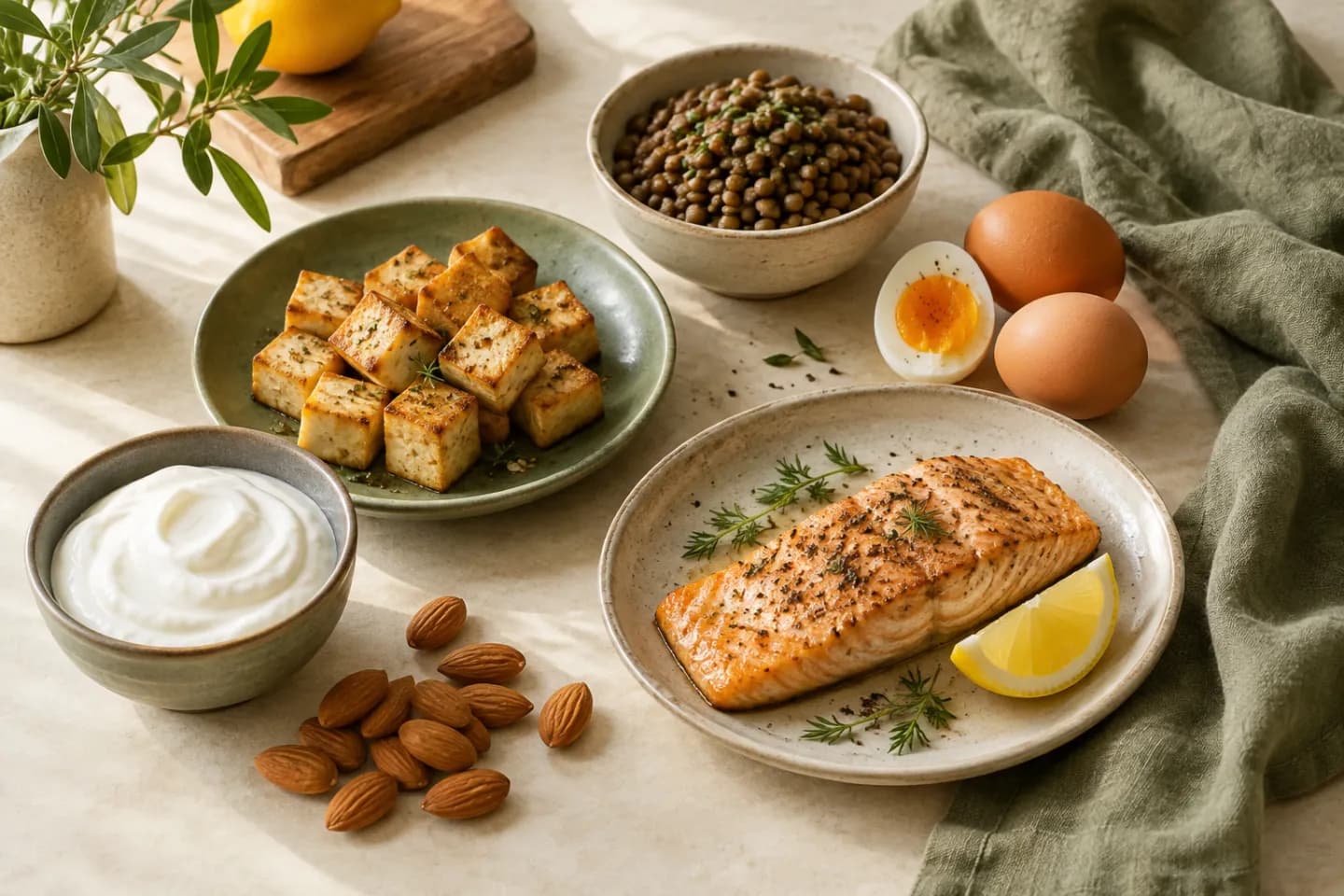
Make a short list of foods you like across breakfast, lunch, and dinner. Eggs may suit a cooked breakfast; yogurt may suit a rushed one. Tofu may work better than chicken when you want one vegetarian dinner for everyone. USDA MyPlate includes beans, lentils, soy foods, eggs, seafood, and meat among protein-food choices.
Avoid treating every substitution as nutritionally identical. A spoonful of hummus, a bowl of lentils, and a serving of tofu are different quantities of different foods. If you track protein, use the label or a reliable food record for the amount actually eaten. Do not infer an exact total from the meal's name or its photograph.
Prepare the meal you are most likely to skip
Choose the weak point in your day. If breakfast disappears during the commute, prepare its components first. If post-workout dinner becomes random snacking, reserve a ready-to-assemble bowl. You do not need to cook every meal in advance to improve the routine; solving one recurring interruption is a useful first experiment.
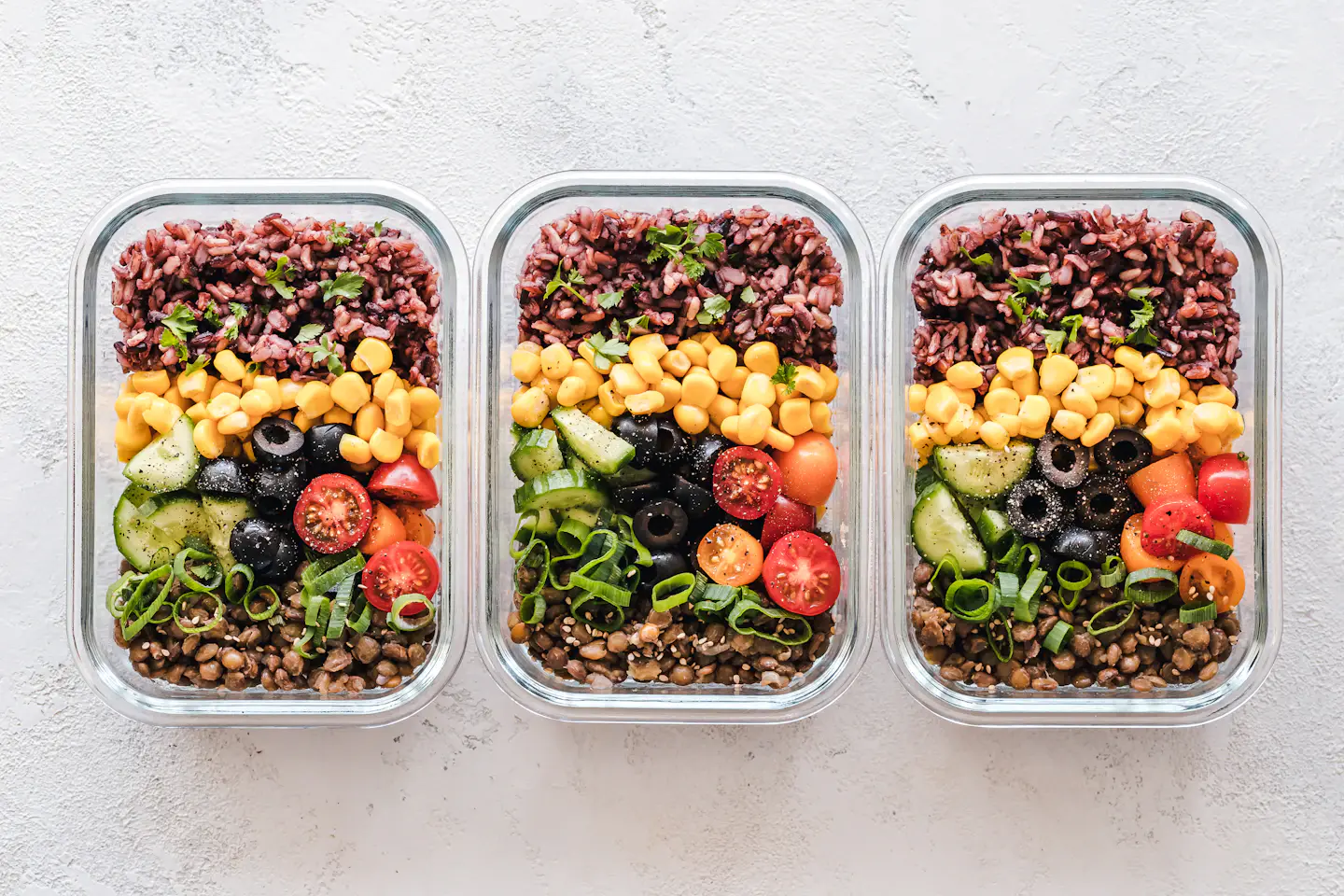
For a simple grocery pass, list your selected protein foods, a grain or potato option, two vegetables, fruit, and a favorite seasoning. Check what is already open before buying duplicates. Keep a fallback combination, such as canned beans with microwave rice and frozen vegetables, for a day when the original recipe becomes unrealistic.
Review the pattern before changing the target
After a week, ask whether you ate the planned meals, whether the portions felt manageable, and whether the menu fit your training schedule. Record which meal repeatedly left you hungry and which recipe you avoided. These observations identify a concrete revision: a larger lunch, a more portable breakfast, or a dinner with fewer preparation steps.
Do not respond to one workout or one body-weight reading with a major dietary change. Bring persistent fatigue, unwanted weight changes, or difficulty meeting your needs to a registered dietitian or clinician. Nutrition for pregnancy, kidney disease, or an eating-disorder history needs individual guidance beyond this general template.
Keep a small food-and-training note
Use four fields: meal planned, meal eaten, what made it easy or difficult, and the next change. A note such as 'lunch was too small before the late session; pack an extra side' is more actionable than labeling the whole day good or bad. Keep adjustments small enough that you can tell whether they helped.
If you use Autumn to organize meals alongside workouts, check the proposed ingredients and portions before relying on an estimate. A planning app can help keep your choices visible; it cannot establish that a menu will produce a particular amount of muscle gain.
Common questions
Do I need a protein powder to plan meals for muscle gain?
No specific supplement is required by this template. Start by looking at your normal meals and practical food choices. If you are considering a supplement, assess the actual gap it would fill and discuss individual needs with a qualified professional.
Should rest-day meals be completely different?
They do not need to be. Reusing familiar meals can make planning easier. Adjust portions or timing to your own needs instead of automatically cutting food whenever a workout is absent.
Sources & further reading
Published by the Autumn team on . Have a correction or a question? Get in touch.